Have you ever thought, how life is like a river flowing to the ocean, trying to be part of something bigger than itself? Always flowing from one day to the next, trying to chart out a path. There are times when the intensity is so high that you flood others and yourself. And times, when you manage a lot, tottering at a slow pace like a steady current. Do you realize, not only does our life resembles a river, but also we can learn a lot from it?
How a river’s life progression is like our own.
The origin is always humble, and then it builds up on energy, enthusiasm, and excitement. Initially, due to the fast learning, there are lots of rapids and shallows (forms of the river when it is turbulent or shallow). Then, with the waterfalls cascading and dribbling around, comes the beauty of youth. Flowing further, it transforms to a strong current with steady progression. Water is no more gushing or outpouring like an eager youth. Don’t get deceived by this form of the river, outwardly calm and contained, but mightier than an invading army.
Ultimately, it’s time to move into the ocean. Every river has a unique identity, but once they merge into the ocean, they assume one single identity.
We all chart this path, some reach maturity and some are not even able to go ahead of the rapids and shallows. Not every water body is capable of becoming a mighty river, yet not every river needs to be mighty.
There is a lot we can learn from a life-giving, powerful, and ever-flowing river. Some of these lessons are critical to our existence.
Many are born a river, but some do not have the background (a big source of water). Is the lack of background important, or what you gain during your journey can be sufficient?
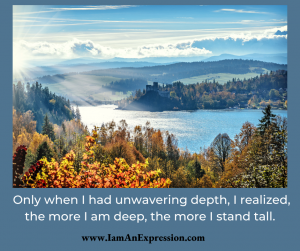
Rivers that continue for longer duration are those which are mightier. The more depth there is, the more mighty a river is. Doesn’t depth of knowledge and maturity leads one to mightiness?
A river does not flow to serve others, it is just its nature to flow and by being true to its nature, it is serving the whole ecosystem. Is it a lesson that we do not need to serve especially? If we are true to our nature as a human being, won’t we will automatically serve humanity?
What do you think, let me know in the comments section?
I am a Life Coach & Blogger, and I believe that every single creation of God has a life lesson for us. To explore more of these lessons, be connected, through my blog and Social Media.
Feeling Stuck? Let’s Figure It Out Together.
Life can feel overwhelming at times—whether it’s work, decisions, or just finding balance. You don’t have to figure it all out alone. If you’d like a space to reflect, gain clarity, or move forward, feel free to explore my coaching page. I’d love to support you on your journey.
“I have made so many wrong decisions in the past.”
I have heard this non-stop cribbing so many times. And I have just one thing to say. We get opportunities to make choices throughout our life. What if we made some bad ones, why can’t the next ones be better? Aren’t we learning from our bad choices? There is never a permanent choice, even if it is a bad marriage, bankruptcy, irreparable body damage. All our bad choices just lead us to a different path. Life is always delivering us gifts that we may choose to open or not. Let’s learn from those who have overcome their obstacles and became an inspiration for others, like Stephen Hawking, Nick Vujicic, Malala Yousafzai…
Even if you are not an inspiration to the world, at least you can be proud of yourself in the mirror if you lead your life by making the right choices. Learn from the past and just make a bit better choice in present. Unless you are dead, life is giving you opportunities to make better choices every moment.
Have you seen anyone in the world without regret? There are only those who allot lifetimes thinking about them or those who allot a few months in life and then move ahead. And sometimes crying over bad decisions lead us to worse, as our focus is only on problems and not on solutions.
I have too many regrets over my bad decisions, so I have decided to spend a few mins every year thinking about them. After all, life is too funny, interesting, ever-changing to spend any more time on regrets.
Whenever something bad happens in life, I just try to tie it all and restrict it to that one bad chapter. Its spillover cannot be stopped but reduced over the next chapters of life.
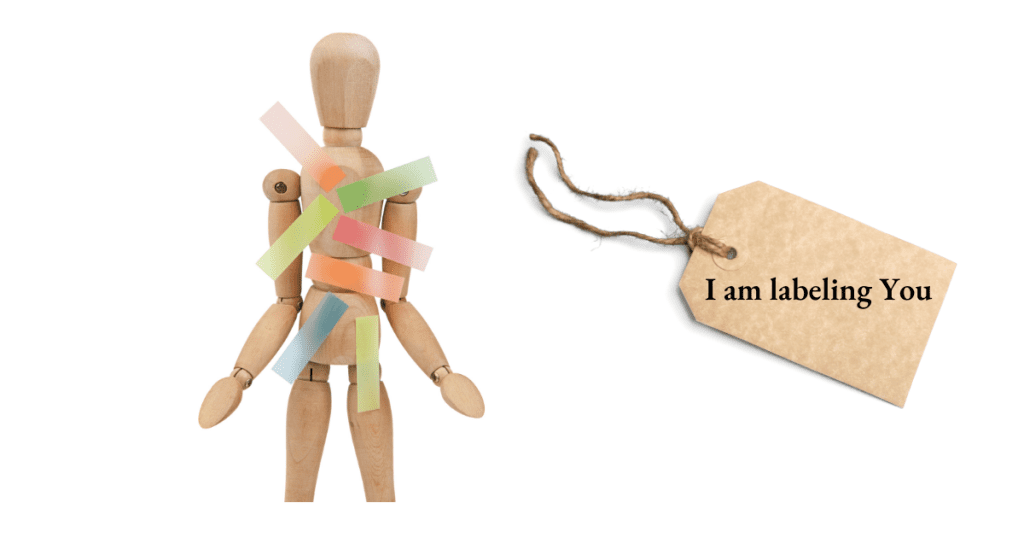
Have you ever felt misunderstood—not for who you are, but for the label society chose for you?
In a world quick to classify, and slow to understand. labels and stereotypes are more than just words – they are limiting molds that distort identity and hinder potential..
The Hidden Damage of Societal Labels
Labels might seem harmless—just shorthand for describing someone. But they come at a steep cost: they flatten complexity into categories. In trying to make people easier to understand, labels actually make them harder to truly know.
Instead of seeing a person’s full depth—their evolving thoughts, talents, contradictions, and dreams—we focus on a single defining trait: “She’s shy,” “He’s an MBA,” “They’re a dropout.” And that one trait becomes the entire story.
Labels Reduce Human Complexity
Humans are inherently layered. We are logic and emotion, certainty and doubt, boldness and hesitation. Labels ignore that richness. They give people a one-dimensional identity, which may be easy to digest—but it’s entirely incomplete.
Worse, once labeled, people begin to shrink themselves to fit the tag. Or exhaust themselves trying to break it.
Ilabels often say more about the person assigning them than the one receiving them. One reason people go for labeling is, it is easier for them to reduce complex personalities to bite sized tags. But this oversimplification, at what cost?
The Psychological Impact: Anxiety, Self-Doubt, and Role Conflict
Being labeled triggers a quiet mental war.
Anxiety: People feel constant pressure to live up to or down to their label. The “smart kid” fears failure. The “quiet one” dreads speaking up. The “funny guy” hides their sadness.
Self-Doubt: When your own understanding of who you are conflicts with how the world sees you, it creates identity dissonance. Over time, you start to doubt your worth and your own truth. Boost your confidence with the article here
Conforming vs. Rebelling: You’re stuck in a loop. Either you conform and suffocate—or rebel and constantly justify your choices. Both paths are exhausting.
This mental toll isn’t always visible. But it silently erodes confidence, limits career growth, and even damages relationships.
From Tags to Traps: How Labels Limit Our Lives
Let’s look at some common examples of how society’s neat labels become messy obstacles:
MBA
You’re expected to be corporate-minded, logical, and “successful”—even if your true calling is in teaching, writing, or the nonprofit world. An MBA becomes a ceiling rather than a stepping stone.
Dropout
Instantly seen as unambitious or undisciplined. Never mind if you’re self-taught, entrepreneurial, or choosing a non-traditional path. The word “dropout” dismisses your journey before it’s even understood.
Introvert
Assumed to be shy, anti-social, or even incapable of leadership. The truth? Many introverts are strategic thinkers, deeply creative, and powerful one-on-one communicators.
Extrovert
Expected to be loud, energetic, and always “on.” But what if they’re feeling tired, introspective, or need space? They’re judged for not performing their personality.
Each of these labels comes with invisible expectations. Break them, and you’re “not living up to your potential.” Conform to them, and you might never realize your full potential.
Gold vs. Iron: A Metaphor for Misjudged Identity
I wrote the following poem to capture how damaging this system can be.
I'm Gold

I'm Gold they called me Iron.
With Iron they heated me,
for melting early they scrapped me.

I'm Gold, why they called me Iron.
Sold me at a dollar a pound,
& said, 'what a bargain I found !'

I'm Gold, but they called me Iron.
tried to color, redden or whiten,
everything was okay only not golden.

I'm gold, yet they called me iron.
I may shine, I may brighten,
but for them I'll always be iron.

I'm Iron

I'm Iron they call me Gold,
and wonder why at their prices I'm not sold.

I'm Iron they call me Gold,
hoping prices will soar they keep me on hold.

I am Iron, why they call me gold?
Do they know at gold's melting point I don't even fold.

I'm Iron, yet they call me gold,
they don't call blacksmith, always Goldsmith gets the scold.

I’m Iron, alas! they call me Gold,
never do they realize my uses are multifold.
Why Society’s Labels Are Often Misleading
Labels Distort Value—Not Define It
Imagine two metals—Gold and Iron.
Gold is celebrated, precious, and admired. Iron? Overlooked, utilitarian, ordinary. You might think being called Iron is an insult. But here’s the truth: Iron builds bridges, powers machines, and holds up skyscrapers. Gold glitters, but Iron holds things together.
Yet in society, just like with metals, we assign value based not on usefulness, depth, or real-world impact, but on perceived prestige.
Society often misjudges people just like these metals—rewarding the wrong traits, and punishing the right ones simply because they don’t “fit the label.”
We reward the “golden ones”—those who look shiny, fit the mold, or meet aesthetic or social expectations. Meanwhile, we dismiss those who are foundational but less flashy. The quiet thinker. The hardworking introvert. The underestimated dropout. The blue-collar worker. The caregiver. The coder without a degree. The woman who didn’t speak up in a meeting but had the best idea. Research on the stereotype threat stresses well on this point.
Someone quiet in meetings? Must be uninterested. Someone expressive? Must be emotional. Someone with a creative degree? Must not be “serious” about work.
The truth is: 🔸 Gold melts early. 🔸 Iron withstands the heat.
Yet when society mislabels people, they either burn too early or are never allowed to shine.
Labels vs. True Value: What Society Rewards Isn’t Always What Matters
Society tends to reward the familiar. The polished. The marketable.
But true value doesn’t always come with a shiny surface.
Think of the colleagues who hold everything together behind the scenes — but never get the spotlight. Or the friend who doesn’t speak often — but when they do, they shift the conversation. Or the student who isn’t top of the class — but changes lives with their kindness, loyalty, or resilience.
Labeling dismisses these silent forces. And in doing so, it holds everyone back.
The Real Damage: Labels Are Not Based on Understanding
When you’re labeled, you’re not seen. You’re simplified. Reduced.
Worse, you’re asked to either match the label — or fight it. Either way, it takes energy that could have gone toward your growth.
Think about this: even nature, even our Creator, gave each of us unique traits. So who are we — as humans — to ignore that uniqueness and impose cookie-cutter molds?
We aren’t just one thing. We’re layers. And we deserve the space to unfold, not be pre-categorized.
How Stereotypes Limit Potential
The Real Damage: Labels Are Not Based on Understanding
The worst part? We don’t label people based on who they are. We create our molds, and then force people to fit in. We dismiss what’s real in favor of what’s familiar.
Even nature and our Creator endowed each of us with unique qualities. But society chooses stereotypes over individuality, categories over nuance.
And once labeled, people spend their entire lives either trying to shake that label off—or painfully outperform it. What a colossal waste of human potential.
Stop Labeling Me. See Me.
Don’t typecast me by:
My nature — sweet or reserved
My education — engineering or arts
My job — IT or marketing
I am more. I am me.
With every label, I am made to fight for my identity. But labels are not identity. And stereotypes are not truth.
It’s time we stop scanning each other with outdated QR codes assigned by society—and start seeing the full picture.
Living Beyond Labels: Embracing Your Full Identity
You are not your degree. You are not your job title. You are not the trait someone else used to summarize you.
You’re the sum of your values, your stories, your potential.
Instead of asking “What are you?” maybe we should start asking “Who are you becoming?”
It’s time to unlearn lazy labeling. To honor both the Gold and the Iron in each of us.
Whether your shine is visible or your strength is quiet — your value is real.
Accept me for who I am. For I am more than my identity, more than my label, more than a stereotype. I am a human with unlimited potential.
Have you ever been mislabeled or misunderstood? Share your story in the comments. Let’s start seeing beyond the surface — together.
I share reflections on personal growth, inner clarity, and navigating change—quietly and thoughtfully. You’re welcome to connect with me on [Instagram] or [Facebook].
Life can feel overwhelming at times—whether it’s work, decisions, or just finding balance. You don’t have to figure it all out alone. If you’d like a space to reflect, gain clarity, or move forward, feel free to explore my coaching page. I’d love to support you on your journey.